

How can we strengthen our thinking in the era of artificial intelligence? Experts, teachers and psychologists looked for answers to this question at a conference in Prešov, held as part of Media Literacy Week 2025.
More than 90 participants gathered at the P. O. Hviezdoslav Regional Library for the conference “The Power of Thinking in the Age of AI”, organised by the Council for Media Services in cooperation with the regional library and members of the Media Literacy+ platform. The main topic was how to maintain independent and critical thinking in the digital age while still making use of the advantages offered by artificial intelligence.
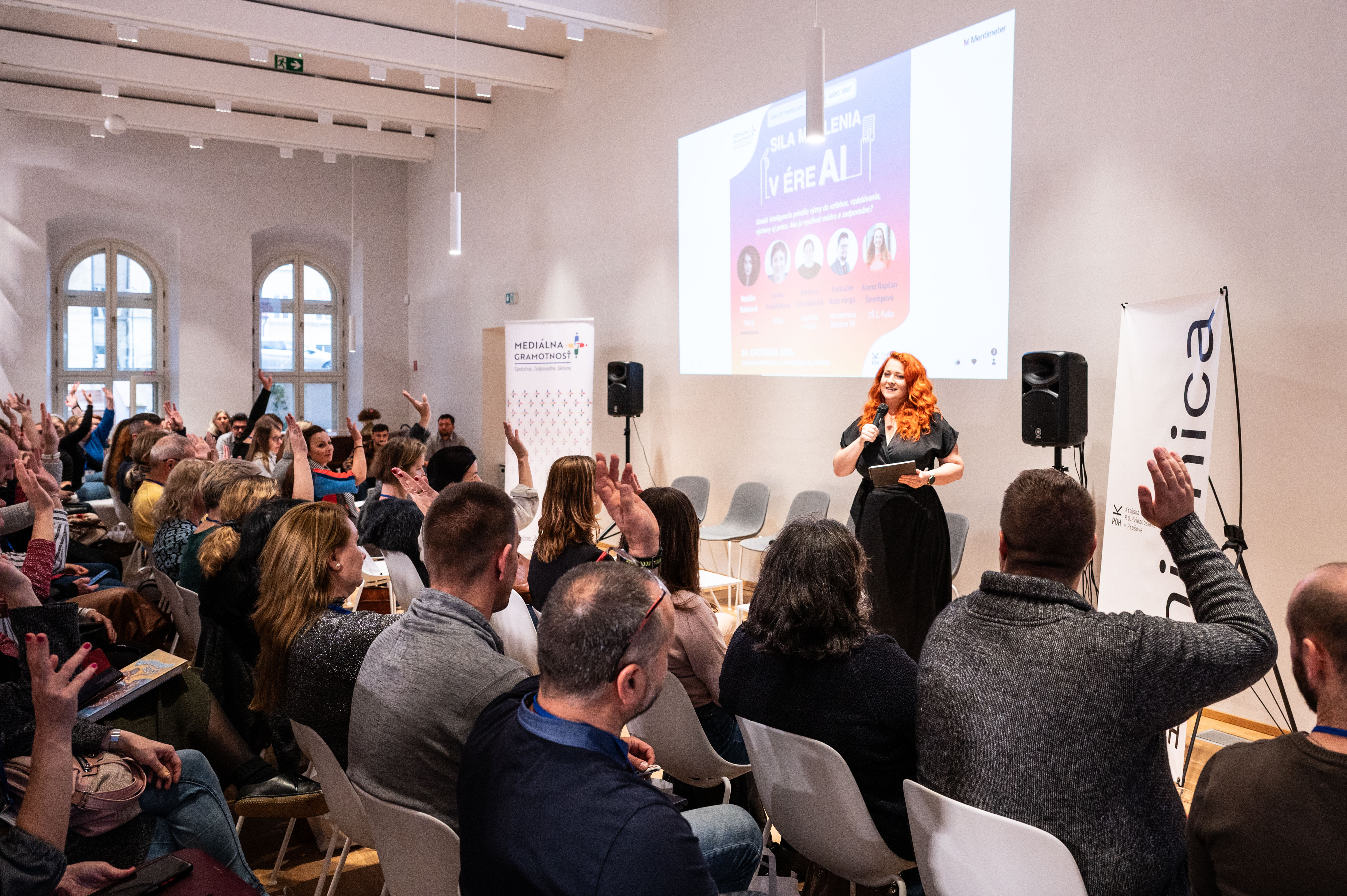
AI as a helper, not a competitor
In the opening panel discussion, experts from the fields of education and psychology agreed that artificial intelligence should not be seen as a threat, but rather as a tool that can support learning and creativity.
“AI doesn’t take away my creativity – on the contrary, it helps me design more meaningful tasks for my students,” said Alena Rapčan Štrompová, winner of the “Teacher of the Year 2025” award.
According to the panellists, the key to successful use of AI in education is its integration into learning in a way that develops not only digital skills, but also students’ critical thinking.
Radoslav Baťo Varga from the Ministry of Education of the Slovak Republic announced that the ministry is finalising a strategic plan for introducing AI into teaching. He added that education about AI will soon become a regular part of school curriculum. The focus will be on understanding how AI works, its practical applications, and its ethical and social aspects.
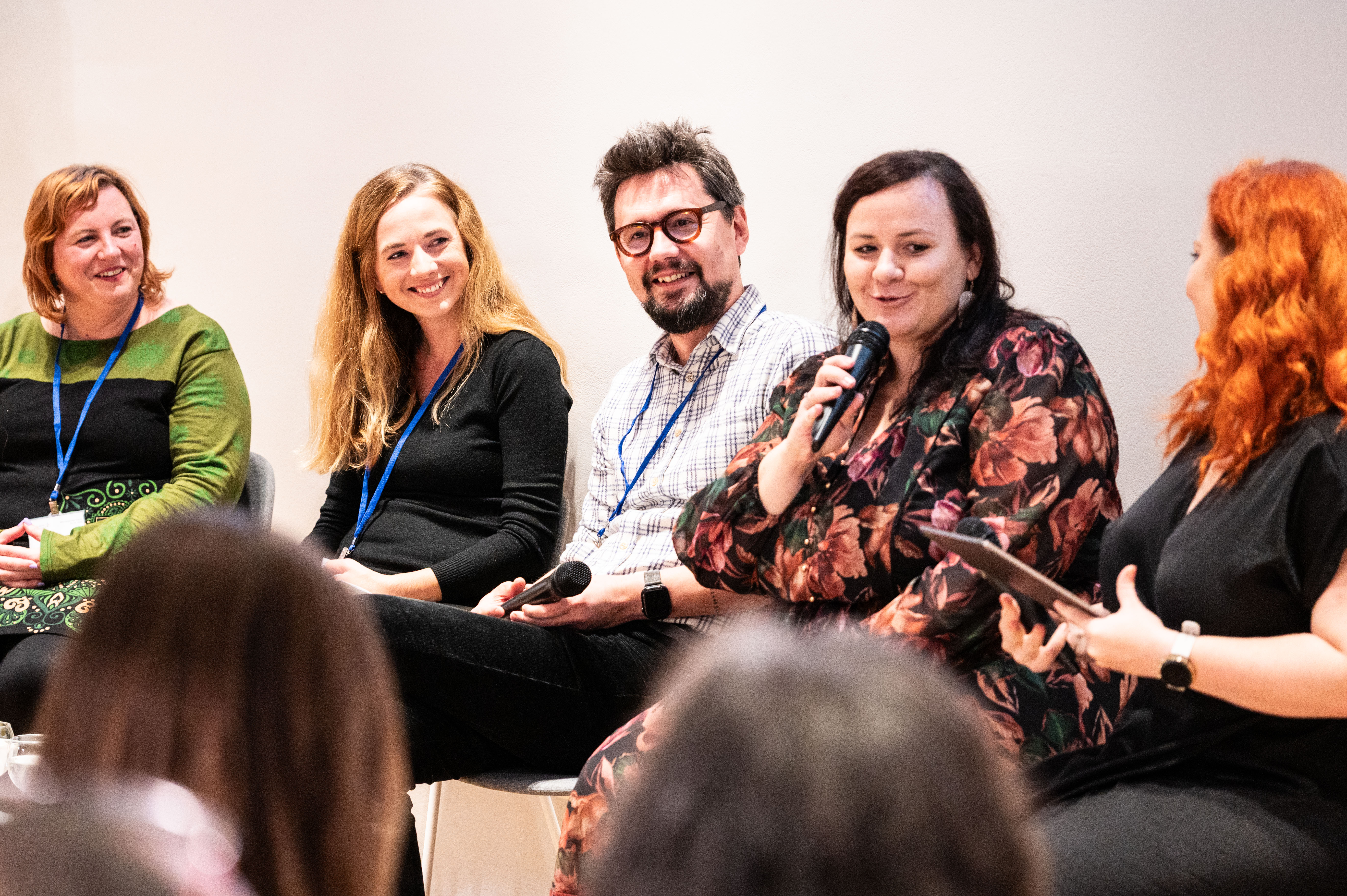
AI as a “friend” can also be a risk
Lenka Kvasňáková from the IPčko crisis helpline spoke about the psychological effects of frequent AI use. She noted a tenfold increase in contacts from young people dealing with “relationships” involving AI.
“Sometimes AI replaces real relationships. Young people often trust a chatbot more than a teacher or a friend,” she said.
The discussion was concluded by Barbora Okruhľanská from the Digital Parents project, who emphasised that technology should serve people – not the other way round. She highlighted the importance of personal contact and the unique value of human presence, which even the most advanced technology can never replace.
“When the electricity or internet goes out, you’ll be grateful for any person next to you – even in the dark,” she added.
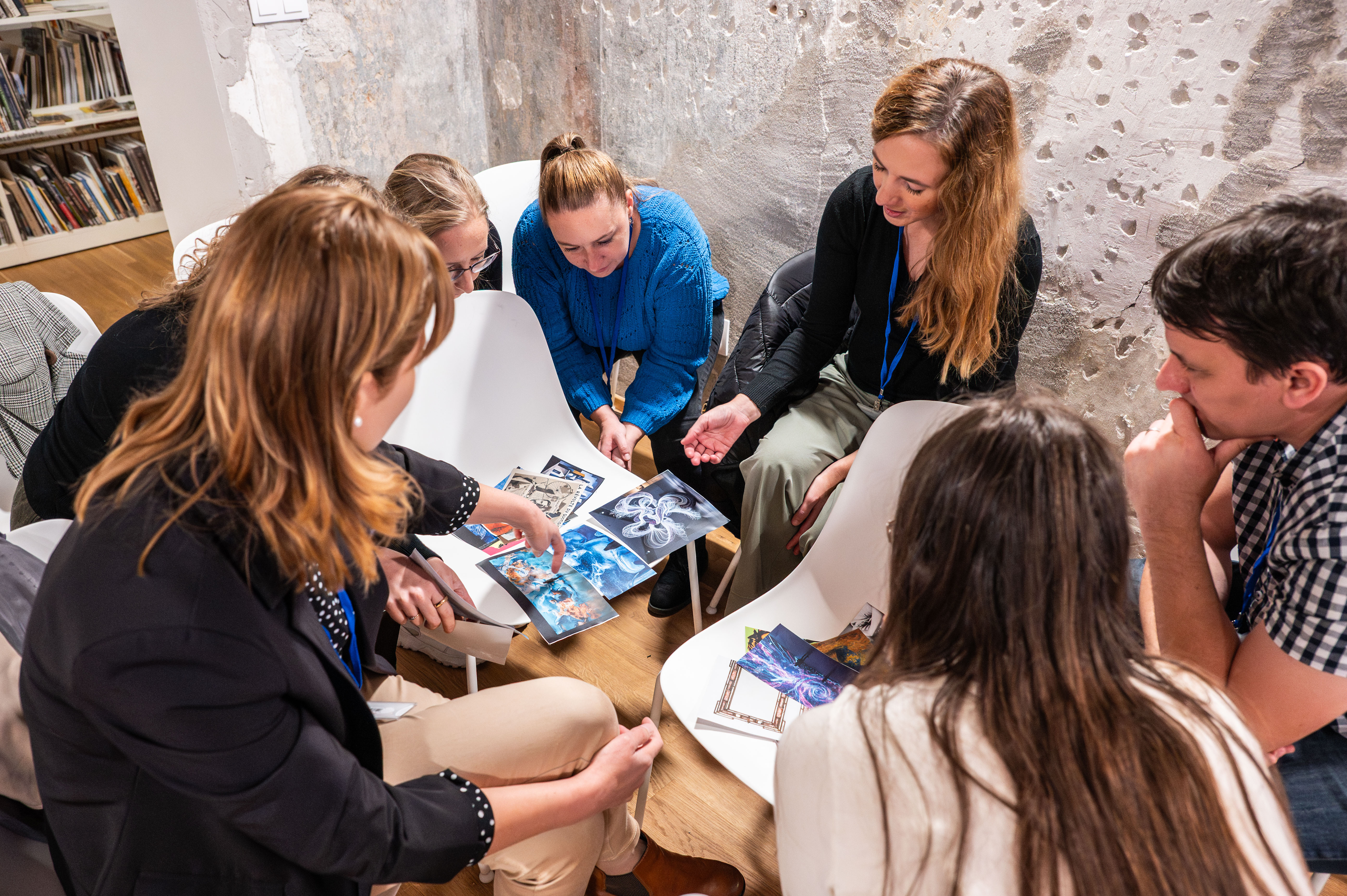
Workshops: From critical thinking to AI in practice
After the discussion, participants could choose from several workshops offering tools and inspiration on how to use AI responsibly and creatively in education and everyday life.
The workshop organised by the Ministry of Education presented ways of using AI to make teachers’ work easier. Representatives of the civic association Flying Fish led a practical session on using games and interactivity to develop critical thinking. The Digi PEERS team held an experiential workshop on respectful communication and empathy.
The One World in Schools (JSNS.cz) workshop drew attention to the risks of AI misuse online, while fact-checkers from Demagog.sk explained why AI should serve as a “compass” when searching for information – not as an autopilot.
Alžbeta Bosnyák Bahúlová led a session on identity and art in the age of algorithms. Barbora Okruhľanská explored how AI affects both Generation Z and adults, and the Zmudri platform offered teachers practical tips on how to use AI safely and effectively.
“The conference offered not only friendly meetings but also lots of useful and interesting information I can apply in my work as a teacher. AI tools can be great assistants, but we must remember that, despite their pleasant responses, they are still just machines – not people. It’s important to discuss this topic with students in a calm and respectful way,” said Linda Ižárová, a teacher from Prešov.
The event concluded with a guided tour of the P. O. Hviezdoslav Regional Library, which recently received the prestigious CE ZA AR award in the category Interior for its renovation.
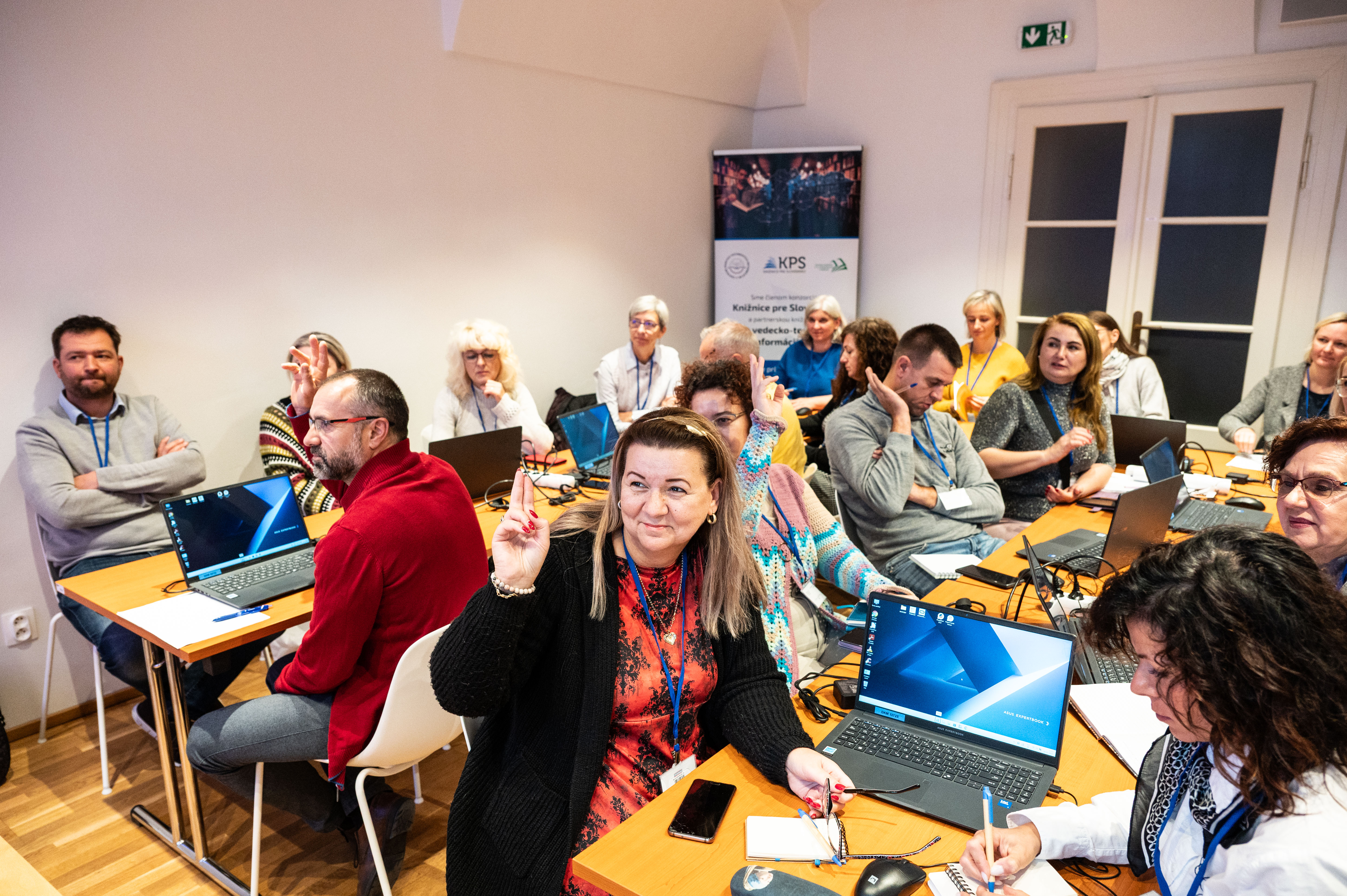
A series of events held as part of Media Literacy Week
The conference “The Power of Thinking in the Age of AI” was one of the main events of Media Literacy Week 2025, an initiative launched by UNESCO in 2011. The Media Literacy+ platform joined the initiative for the fourth time, organising a series of events supporting the development of media and digital skills across Slovakia.
Alongside the conference, workshops, discussions and educational projects were held throughout the country to promote media competence among children, young people and adults.
Lenka Regrutová, a university lecturer and member of Media Literacy+ platform, organised a workshop titled “Respectful Communication in the Age of AI” for students of the primary and preschool in Tuhrina.
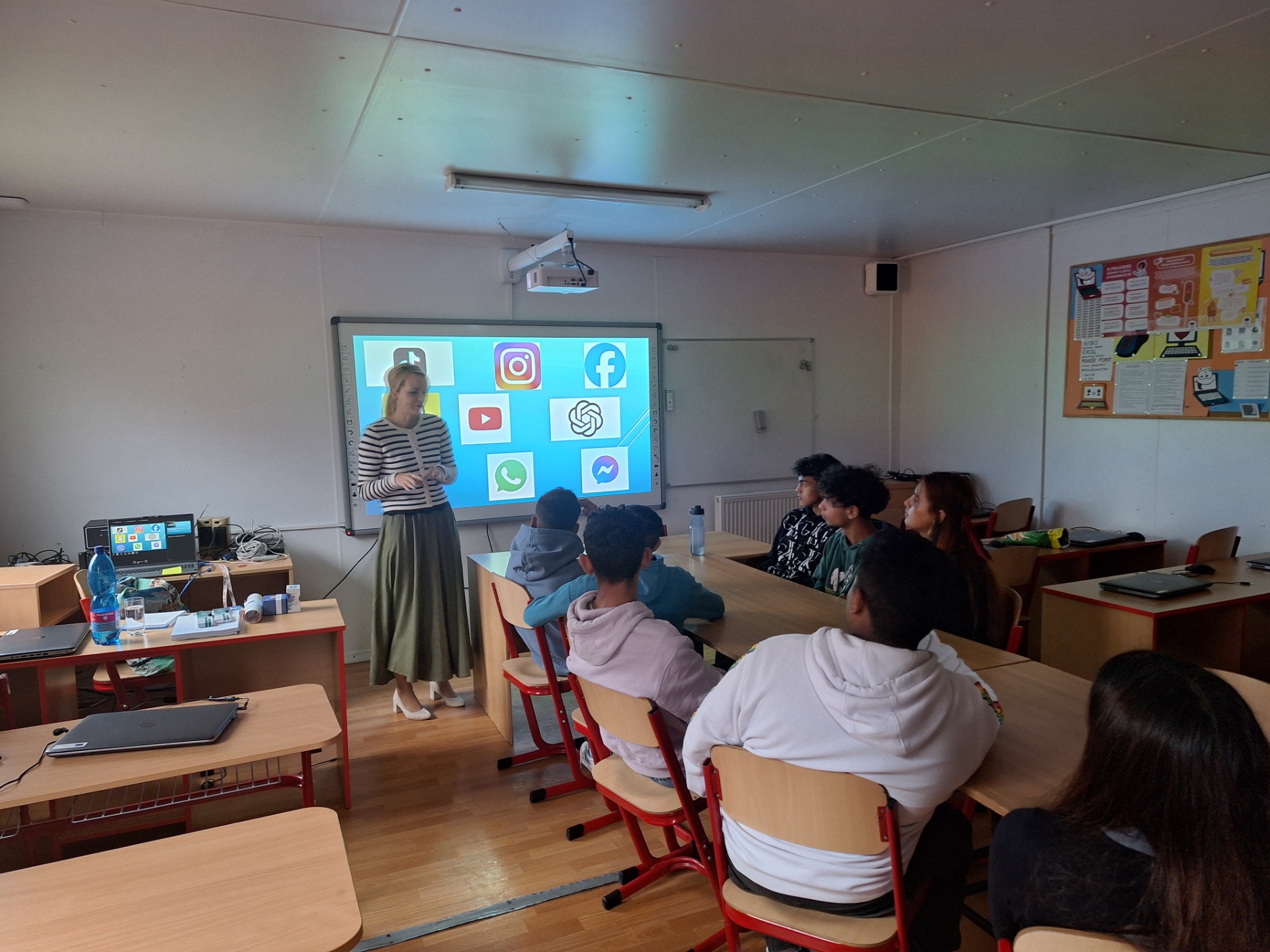
“The workshop reminded students of the importance of respect for themselves and others. This is a long-term process that, apart from school, is also strongly influenced by the family environment. That’s why such activities should take place more often – to support teachers in their efforts,” said the lecturer, who guided students through games, videos and discussions to help them recognise the difference between hateful and respectful comments, understand the consequences of sharing personal information, and define rules for respectful communication.
Throughout the Media Literacy Week, the Council for Media Services continuously shared updates and contributions on its website and social media of Media Literacy+ platform (Facebook, Instagram, LinkedIn).
Members of the platform also prepared a short guide on how to stay calm, thoughtful, and mindful in the era of artificial intelligence – and how to strengthen critical thinking in the digital world.
Text: Karolína Vlčková
Photos: Peter Haľko, zstuhrina.edupage.org